Vannamei vs Black Tiger shrimp: how importers choose between them
EXPORT MARKETS · 20 Aug 2026

India farms two shrimp species for export: Vannamei (Litopenaeus vannamei, also sold as whiteleg or Pacific white shrimp) and Black Tiger (Penaeus monodon). MPEDA’s figures for FY 2025/26 show both growing in volume and value, so buyers have real choice between them. They are not interchangeable, though. They differ in size, texture, colour, price and the jobs they do best on a menu or a shelf.
Vannamei: the volume species
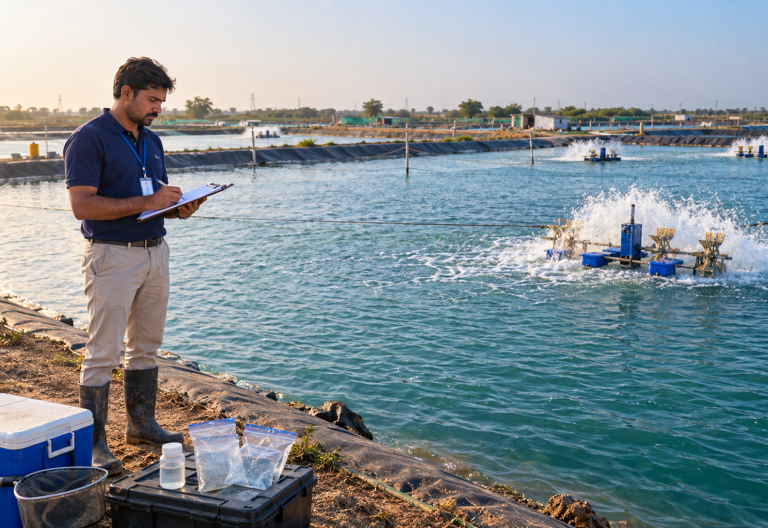
Most of the farmed shrimp India exports today is Vannamei. Farmers stock it from specific pathogen free (SPF) seed produced by hatcheries approved by the Coastal Aquaculture Authority, and it grows well at the stocking densities commercial ponds run. That makes supply steady and sizes predictable.
The raw shell is translucent grey to white. Cooked, the flesh turns white with orange red markings and has a mild, slightly sweet taste. The texture is tender.
Vannamei suits jobs where consistency and price per serving matter most:
- retail packs of peeled and deveined (PD) or peeled undeveined (PUD) shrimp
- cooked shrimp and ready meals
- food service lines that need the same count week after week
- breaded, skewered and other value added products
Black Tiger: the premium species
Black Tiger is native to Indian coastal waters and was the backbone of Indian shrimp farming before Vannamei arrived. It grows larger, and the biggest grades are where it stands out. The raw shell carries dark bands across a grey, blue or brown body, which gives the species its name. Cooking turns the shell a bright red orange, and the stripes stay visible.
The meat is firmer and has a fuller flavour than Vannamei. It holds its shape on a grill or in a curry, and it looks impressive on a plate, which is why chefs and premium retailers pay more for it.
Black Tiger usually suits:
- large head on shell on (HOSO) and headless shell on (HLSO) grades
- restaurants and hotels where presentation matters
- grilling, tandoor and barbecue dishes
- premium retail and festive season ranges
Side by side
| POINT OF COMPARISON | VANNAMEI | BLACK TIGER |
|---|---|---|
| Scientific name | Litopenaeus vannamei | Penaeus monodon |
| Raw appearance | Translucent grey to white | Dark bands on a grey, blue or brown body |
| Cooked appearance | White flesh, orange red markings | Bright red orange shell, stripes visible |
| Texture | Tender | Firm |
| Flavour | Mild and slightly sweet | Fuller and stronger |
| Size range | Small to large | Medium to very large |
| Price at the same count | Lower | Higher |
| Best for | Volume retail, cooked, value added | Premium food service, grilling, large grades |
How to choose
Start with the dish or the shelf, then work back to the species.
If your customers buy on price per pack, or if you are building a peeled or cooked line that needs the same count all year, Vannamei usually gives you the better cost per serving. Supply is larger and grading is easier to keep consistent.
If you sell to restaurants, run a premium range or need very large grades such as 4/6 or 6/8, Black Tiger earns its higher price. Its size and stripes are part of what the end customer pays for.
Many buyers carry both. Vannamei covers the volume lines and Black Tiger covers the premium ones, and a supplier who handles both species can consolidate them into one container.
A few more points to settle before you order:
- Count and cut. Agree the count (pieces per pound or per kilogram) and the cut (HOSO, HLSO, PUD, PD or a custom cut) together with the species. The same count costs very differently in the two species.
- Freezing format. Both species are available IQF or block frozen. IQF suits portioning, while block frozen suits buyers who thaw and reprocess in bulk.
- Market rules. Your destination market’s residue testing and labelling rules apply equally to both species, so ask about pre harvest testing and laboratory reports for either one.
Vannamei and Black Tiger from Olpad Aqua
We supply both species in every format we produce: HOSO, HLSO, PUD, PD, cooked, IQF, block frozen, value added and custom cuts. HOSO runs from 4/6 to 51/60 per kilogram, and HLSO from 4/6 to 91/110 per pound.
Our involvement starts before the crop. Farmers in our network at Olpad, Surat, Navsari and Valsad stock certified seed from more than 10 CAA approved hatcheries, and our aquaculture team guides the crop through to harvest. Every pond passes pre harvest testing before it is harvested, and processing takes place at our partnered certified facilities at Taloja, which are HACCP and BRCGS certified, FDA registered, EU approved and EIC certified for export.
Tell our export desk the species, count, cut, packing, volume and destination port, and we will send you a price. If you have not decided between the two species yet, tell us the dish or the shelf you are buying for and we will suggest one.
Related reading
Frequently asked questions
Yes. Litopenaeus vannamei is sold as Vannamei, whiteleg shrimp and Pacific white shrimp. All three names refer to the same species.
At the same count, Black Tiger usually costs more than Vannamei. It grows larger, takes longer to farm and is produced in smaller volumes.
Yes. MPEDA reported that India’s exports of both Vannamei and Black Tiger shrimp grew in volume and value in FY 2025/26.


Explore Latest News & Insights

-
EXPORT MARKETS · 15 Oct 2026
Shrimp traceability from pond to port: what buyers should ask for
Read Update -

EXPORT MARKETS · 17 Sep 2026
How to import shrimp from India: a step by step guide for buyers
Read Update

